Self Diagnostics
Find the Problem. Understand the Cause. Know What to Do Next.
Our Self Diagnostics Guide helps you identify common warning signs and understand what they could mean for your foundation, basement, and property. Use the information below to narrow down the possible cause of the problem and determine when it may be time to have a professional take a closer look.
A quick visual check can help you spot a problem early — but it should never replace a professional assessment when serious damage is suspected.
What Problem Are You Seeing?
Start by finding the symptom that best matches what you’re noticing around your property.
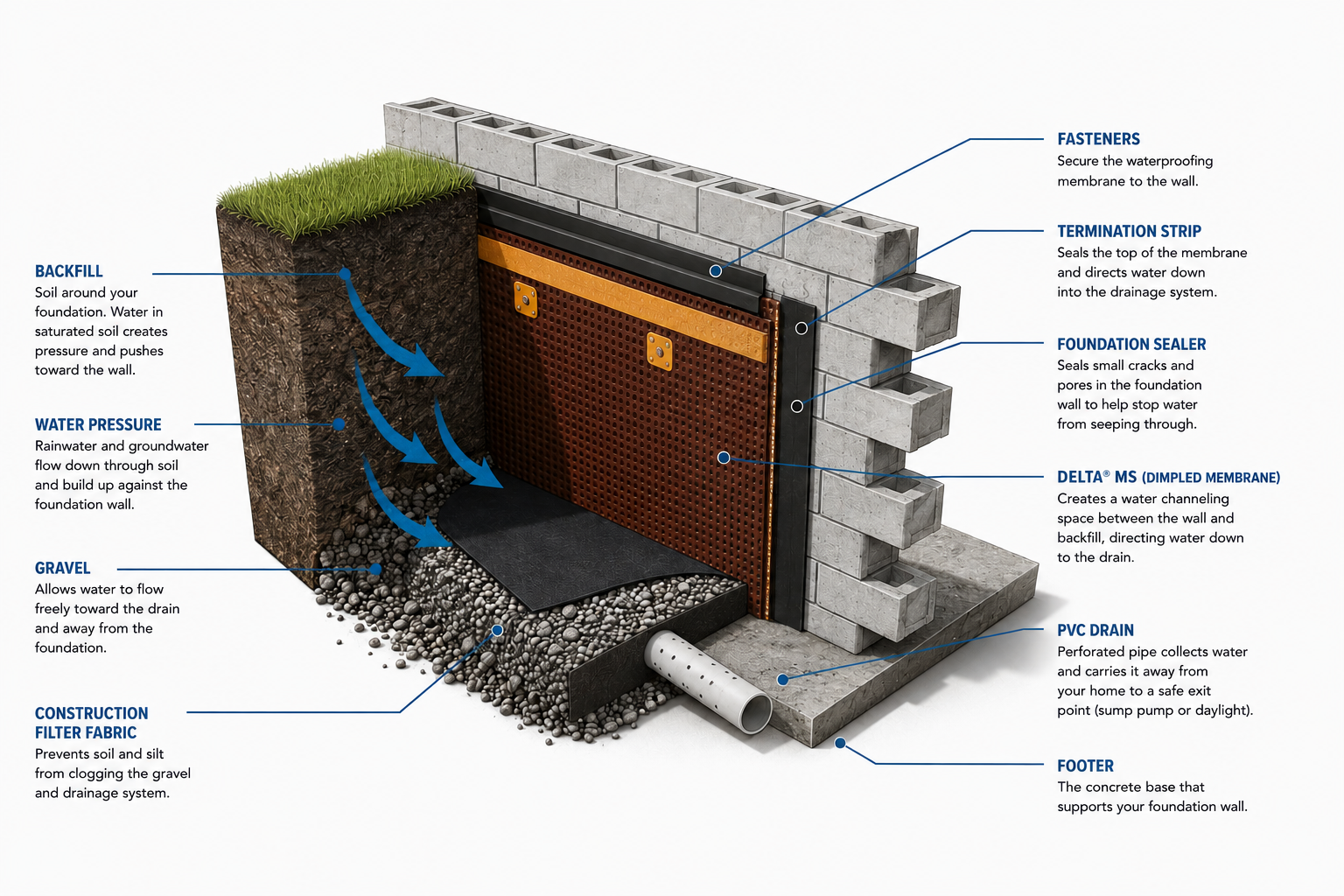
Water in Your Basement
Water can enter through foundation cracks, wall-floor joints, windows, drainage systems, or areas where exterior water is collecting against the foundation.
Common signs include:
- Water seeping through foundation walls
- Damp or wet basement floors
- Water appearing after heavy rain
- White, chalky deposits on foundation walls
- Musty smells or excessive basement humidity
- Water collecting where the wall meets the floor
What Could It Mean?
The problem may be related to poor exterior drainage, foundation cracks, hydrostatic pressure, failed drainage systems, or inadequate waterproofing.
Possible solutions:
Waterproofing • Crack Repair • Sump Pumps • Drainage Solutions
Foundation Cracks
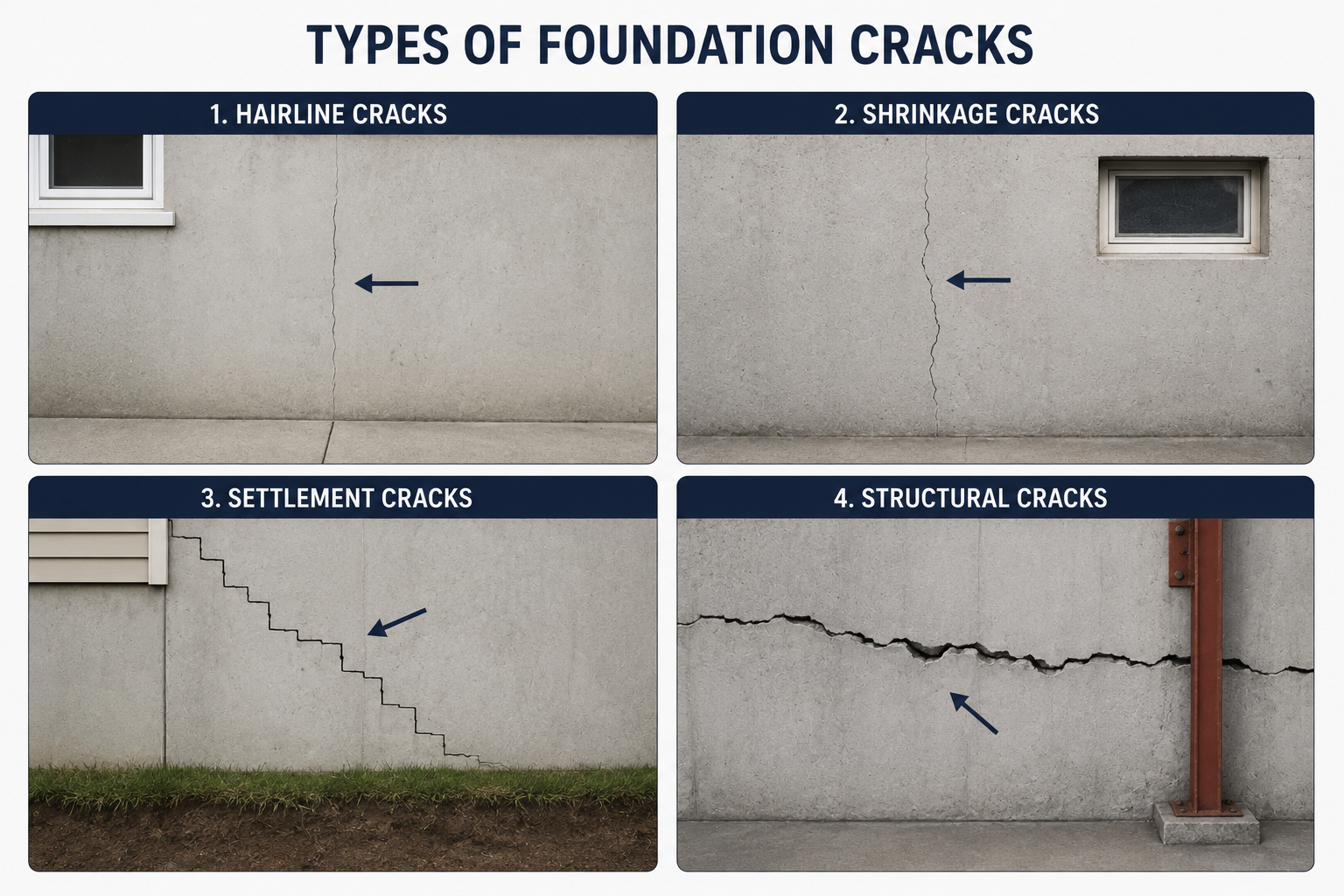
Not all foundation cracks are the same. Their size, direction, and location can indicate what’s happening.
Hairline Cracks
Usually minor, but monitor for growth or moisture.
Shrinkage Cracks
Common as concrete cures. Monitor for widening or leaks.
Settlement Cracks
Often diagonal or stair-step and may indicate soil movement.
Structural Cracks
Wide, horizontal, or displaced cracks may signal serious foundation movement.
Possible solutions:
Foundation Repair • Crack Repair • Helical Piers • Structural Repair
Is Your Basement Leaking?
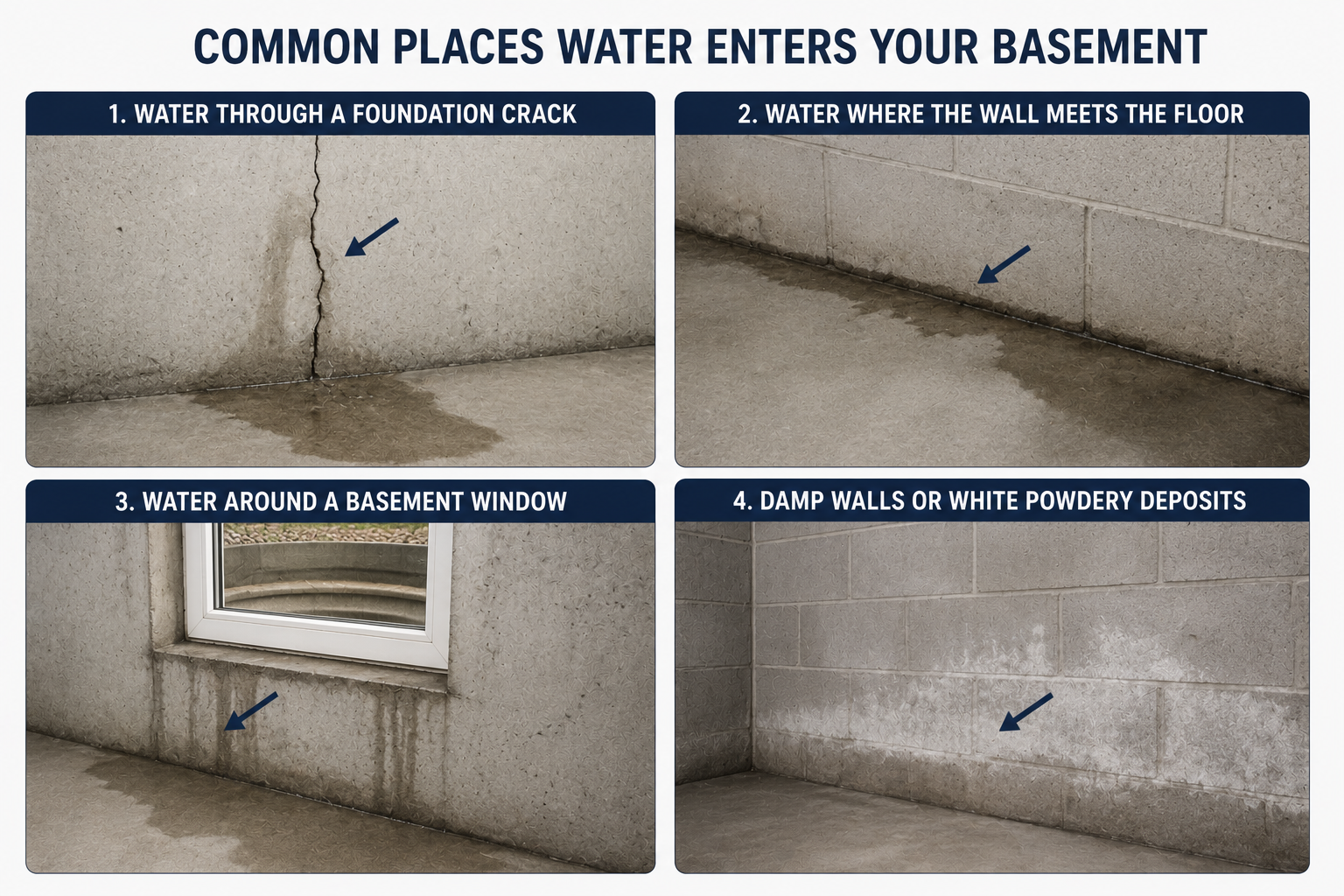
Where the water appears can provide an important clue.
Water Through a Foundation Crack
Possible cause:
A foundation crack may be allowing groundwater to enter the basement.
Water Where the Wall Meets the Floor
Possible cause:
Water pressure beneath or around the foundation may be overwhelming the drainage system.
Water Around a Basement Window
Possible cause:
Poor window-well drainage, damaged seals, or water collecting against the foundation.
Damp Walls or White Powdery Deposits
Possible cause:
Moisture may be moving through the foundation and leaving mineral deposits known as efflorescence.
Potential solution:
Waterproofing or Foundation Repair
Look Beyond the Basement
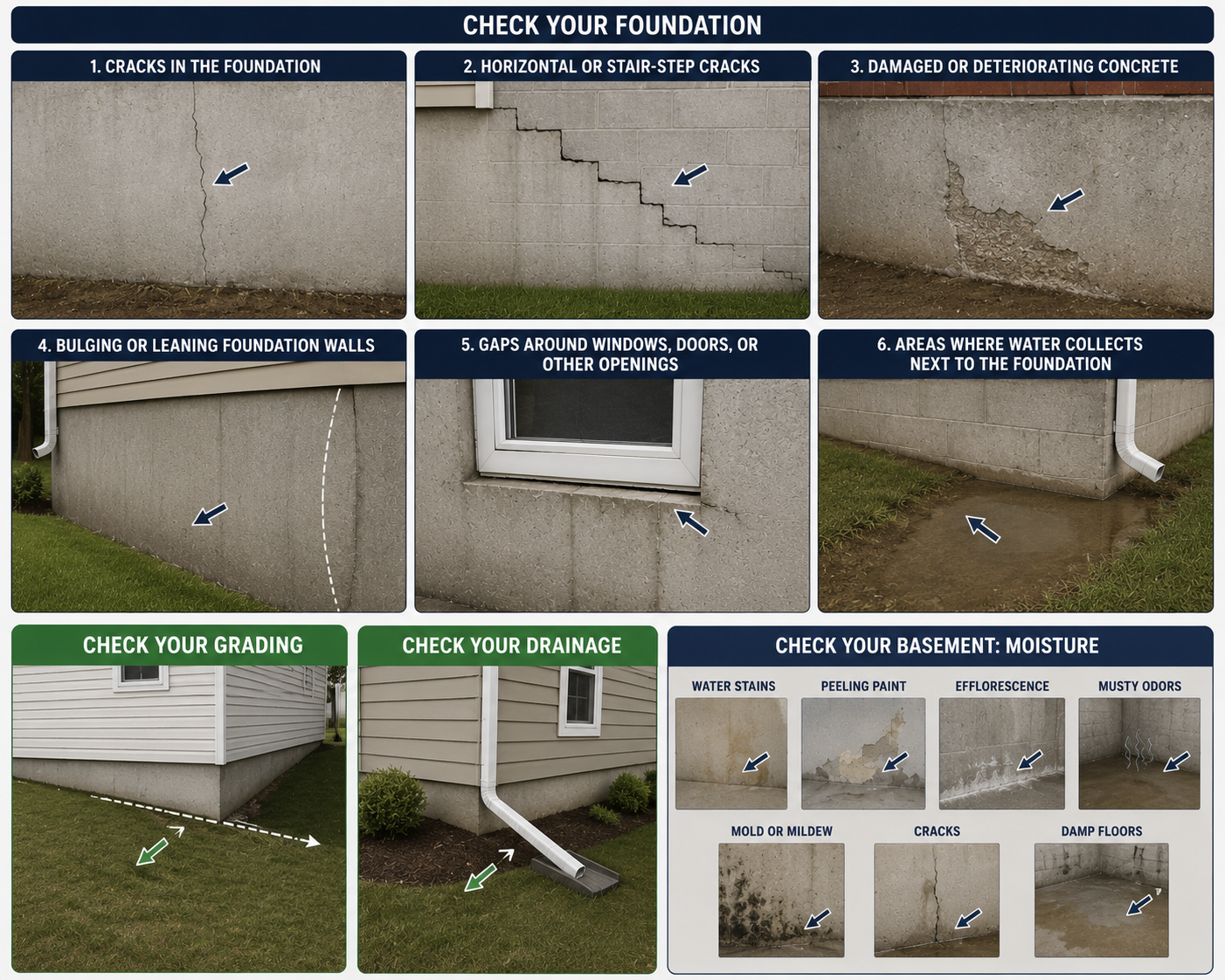
Foundation problems aren’t always obvious from inside the house. Take a walk around the exterior of your property and look for these warning signs.
Check Your Foundation
Look for:
Cracks in the foundation, Horizontal or stair-step cracks, Damaged or deteriorating concrete, Bulging or leaning foundation walls, Gaps around windows, doors, or other openings, Areas where water collects next to the foundation
Check Your Grading
Water should be directed away from your foundation, not toward it. Look for low areas around the home where rainwater or melting snow may collect.
Check Your Drainage
Make sure downspouts are directing water away from the foundation and that there are no obvious drainage problems around the property.
Check Your Basement
Look for:
Moisture, Water stains, Peeling paint, Efflorescence, Musty odors, Mold or mildew, Cracks, Damp floors. These can all be useful clues when determining whether your property has a moisture or foundation problem.
Don't Guess What's Wrong With Your Property
A crack doesn’t always mean structural failure. Water doesn’t always mean you need exterior waterproofing. And a settling problem may require a very different solution than a simple foundation crack. The right repair starts with the right diagnosis. Legacy Restoration can assess the signs you’re seeing, identify the likely source of the problem, and help determine the appropriate repair strategy.
Quality Workmanship
We take pride in delivering careful, professional work and paying attention to the details that matter.
Reliable Solutions
We focus on addressing the underlying issue and providing practical restoration solutions for your property.
Customer Focused
Every project starts with understanding your needs. We work with you to make the restoration process as straightforward as possible.
Built for the Future
Our goal isn't just to repair what's damaged, It's to help protect your property for years to come.
Why Choose Legacy Restoration?
Our experience in foundation and restoration work allows us to approach each project with practical knowledge and attention to detail.
Ready To
Start Your
Project?
Don’t let a minor problem turn into a major repair.
From cracked foundations, water damage, structural issues to damaged concrete, Legacy Restoration has got you covered.
Why not restore your home and make it last for many years to come?